

Die-Cut vs Kiss-Cut Stickers
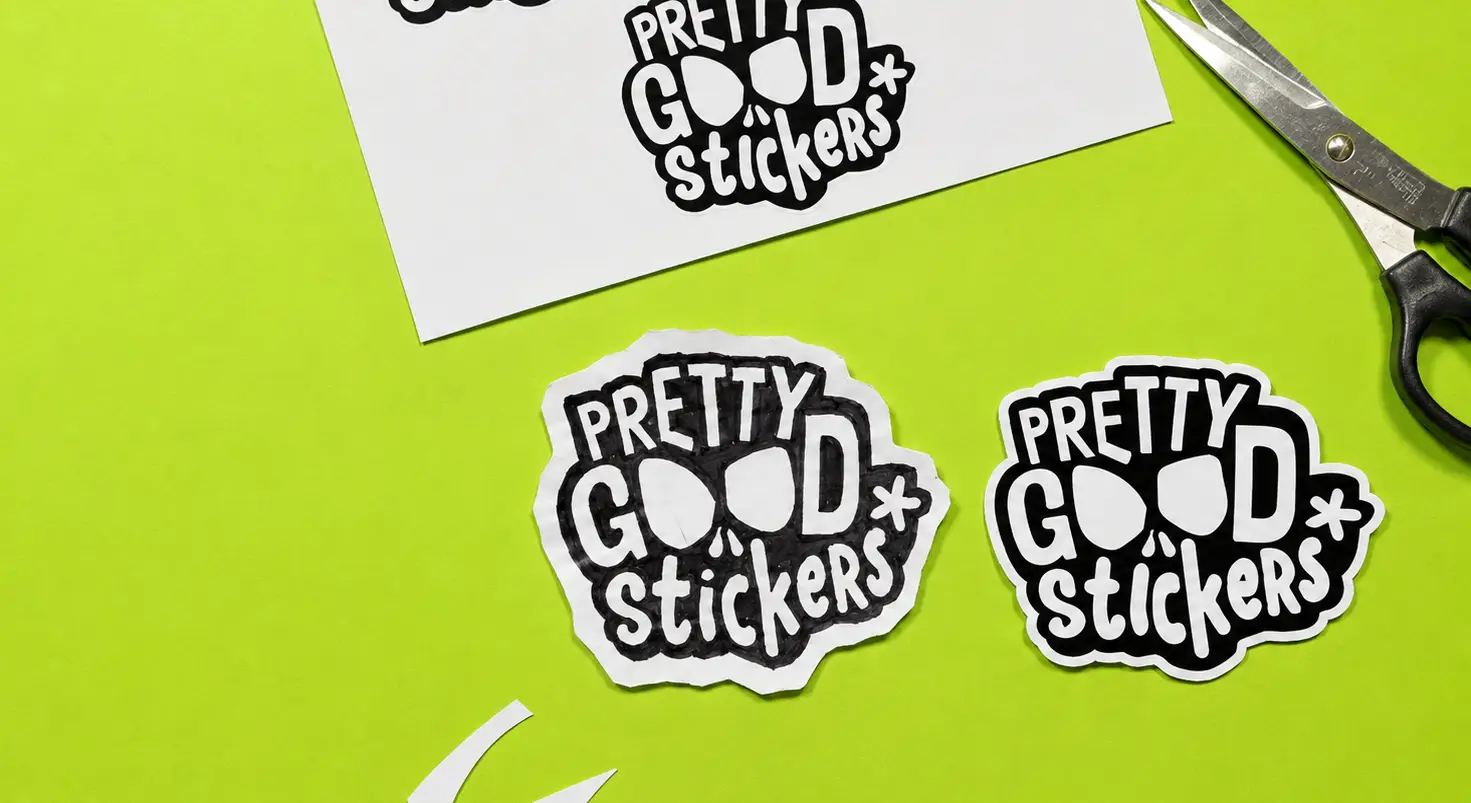
Peel a die-cut sticker and the whole thing comes away in the shape of your design, no border, nothing left behind. Peel a kiss-cut one and the design lifts off a backing sheet that stays rectangular in your hand. That gap in how they peel is the visible tip of a bigger difference, one that decides whether your design ends up looking like a finished object or a design sitting on a label.
Cut through everything, or cut through one layer
Both start from the same place: your artwork and a cut line. What separates them is how deep the blade goes.
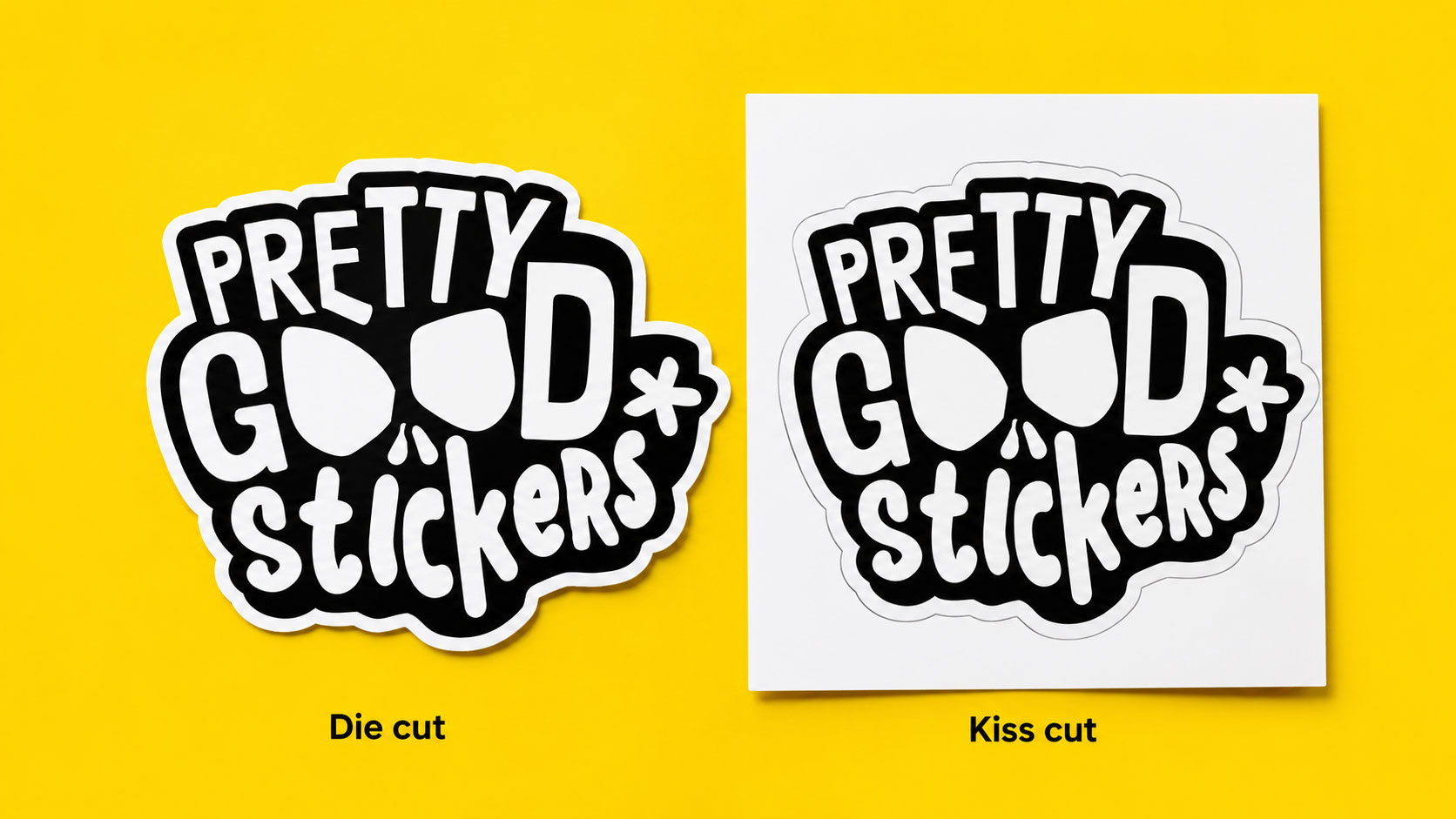
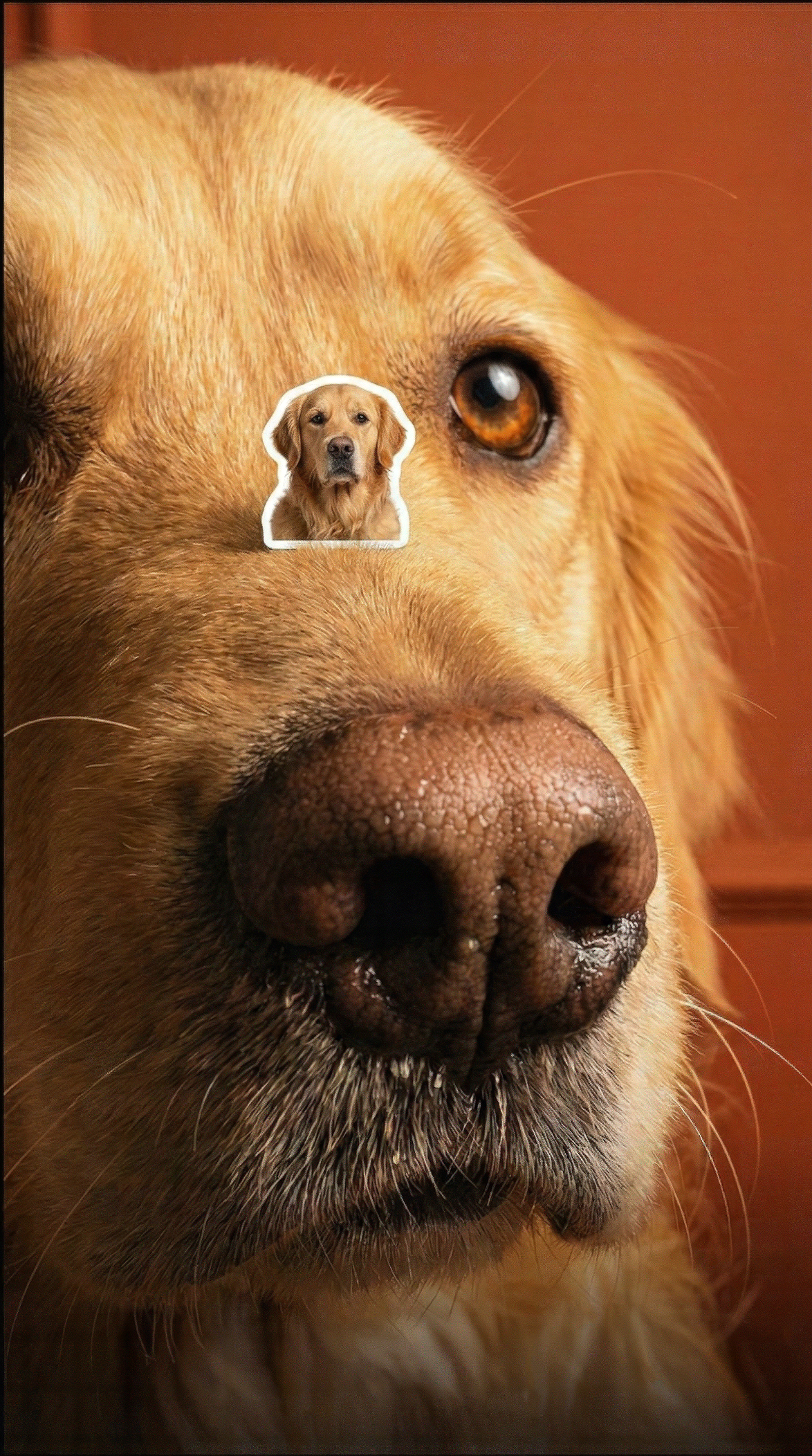
Die-cut cuts through every layer. The backing matches the sticker’s outline exactly, so what you hold is the design itself, edge to edge, with no surrounding border. It reads as a standalone object.
Kiss-cut cuts through the sticker layer only and stops. The backing stays whole underneath, usually rectangular or a sheet, with the sticker sitting on top inside a margin of exposed liner. That margin looks like leftover space. It’s actually the feature.
Die-cut when the sticker is the product
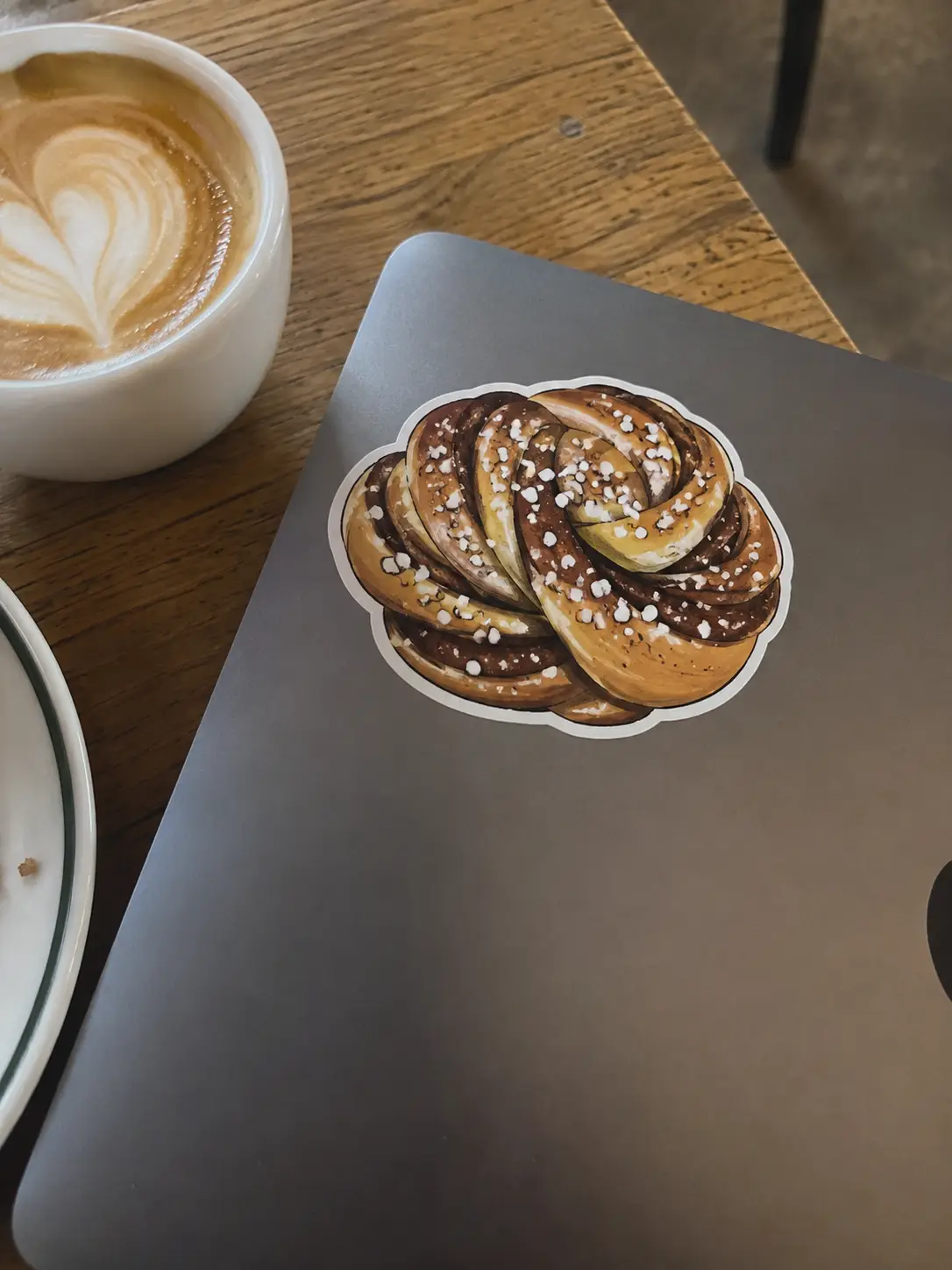
Reach for die-cut when the shape of the design is the point. A logo, a character, a custom silhouette, a laptop sticker that looks cut to fit. No border competes with the outline, so the design feels deliberate and complete.
For an artist selling individual designs as merch, this is usually the format. A die-cut illustration reads as a small finished thing rather than a picture printed on a rectangle, and that difference shows up in whether someone decides it’s worth buying.
The wrong place for die-cut is a design with thin, protruding, or fragile parts. The cut follows the outline exactly, so a thin antenna, a wispy tail, or spindly lettering becomes a physical weak point, the first thing to catch on something and lift. If the design has delicate edges, die-cut exposes them.
Kiss-cut when the design is delicate, small, or part of a set
The backing margin that kiss-cut leaves behind earns its keep in three situations.
Delicate designs get support. Thin or intricate shapes that die-cut would leave exposed stay protected by the surrounding sheet until the moment they’re peeled, and then they come off clean.
Sets and small designs get a format. A sticker sheet only exists because of kiss-cut: multiple designs on one backing, each peeled individually. An artist selling a collection rather than a single hero image needs this, not die-cut.
Small stickers get peelable. The margin gives a fingernail something to catch. A tiny die-cut sticker with no border can be genuinely fiddly to lift, and kiss-cut removes that friction entirely.
Where kiss-cut works against you is a single premium design meant to feel like an object. The visible backing border can tip it toward looking like a label instead of a finished piece. If the design is the product and it isn’t fragile, die-cut sells it harder.
The tradeoff most comparisons skip
Die-cut looks more finished and forgives less. The clean borderless edge is the selling point, and the exposed fragile detail is the price, both produced by the same cut.
Kiss-cut is more practical and can look less premium as a single unit. The protective, peelable, set-ready backing is the advantage, and the visible border is what you pay for it.
Neither is the better cut. They’re built for different jobs, and regret comes from putting a design on the wrong one, not from anything about cut quality.
The cut line does itself
You don’t draw the cut line by hand. Upload the artwork and the editor traces the shape for you, then a slider sets how tight or loose the cut sits against the design, snug for a clean outline, eased out for a border. That slider works the same for both cuts. The only difference is whether the backing gets cut through with the sticker or left whole as a sheet.
A cleaner file traces sharper. A design with a clear silhouette and real transparency gives the trace a defined edge to follow, where a busy or boxed-in file gives it a vaguer one.
By what you’re making
- One logo or hero illustration as merch: die-cut, so it reads as a finished object.
- A sticker sheet or a set of small designs: kiss-cut, the only format that does it.
- A design with thin, fragile, or protruding parts: kiss-cut, so the backing protects what die-cut would expose.
- A packaging seal or thank-you sticker: either, though kiss-cut peels faster off a sheet during packing.
- Small stickers people peel on the go: kiss-cut, for the grabbable border.
What we recommend
Selling one design that isn’t fragile, go die-cut for the finished-object look. Making sheets, small icons, delicate shapes, or anything where easy peeling matters, go kiss-cut. Stuck between them on a single sturdy design, die-cut usually gives the cleaner result, and one test order shows you the difference in hand before you commit to a run.
When to contact support
Reach out if your design has very thin or fragile parts and you’re unsure die-cut will hold them, or if you’re planning a sheet layout and want spacing checked before ordering. Both are simpler to settle before production than after.
FAQ
What’s the difference between die-cut and kiss-cut stickers?
Die-cut is cut through both the sticker and its backing, so it takes the shape of the design. Kiss-cut is cut through the sticker layer only, leaving a backing sheet around it.
Which is better for sticker sheets?
Kiss-cut. Several designs sit on one backing and peel off individually, which is what a sheet is. Die-cut separates each design completely.
Which is better for a single logo or illustration?
Usually die-cut. With no border, the sticker takes the shape of the design and reads as a finished object rather than a design on a rectangle.
Are die-cut stickers more fragile?
They can be. The cut follows the outline exactly, so thin or protruding parts are left exposed and can catch or lift. Kiss-cut’s backing protects those shapes.
Which is easier to peel?
Kiss-cut, for small stickers, because the backing border gives you something to grab. Small die-cut stickers can be fiddly with no margin to catch a fingernail on.
Do die-cut and kiss-cut cost differently?
Pricing tracks size, material, and quantity more than cut type. If cost is the deciding factor, confirm it for your specific order rather than assuming one is cheaper.
 Staff
Staff