

Name labels for adults: how to label the things that keep disappearing
Label the things that leave your house and look like everyone else’s: the charger at work, your tools, the bike helmet. A sticker on a clean, smooth surface does the job, and anything that could get left behind somewhere should carry your phone number as well. Clothes, lunchboxes and anything that goes in the dishwasher need something else. As for the milk in the office fridge, a passive-aggressive note always turns up too late. A sticker is already on the carton when someone fancies a splash.
We print stickers in Gothenburg every day and there’s no minimum, so you can order a single one for your charger or a whole stack with your name for the toolbox. If you’re unsure about size or wording, get in touch. Clothes are the exception: they need iron-on or sew-in labels, because stickers aren’t made for the washing machine, and those we don’t make.
Do adults really need name labels?
Yes. Adults lose fewer things than children do, but what they lose ends up in more places: the meeting room, the gym changing room, the neighbour who borrowed the drill, a work van that isn’t yours. None of those places comes with a nursery teacher who reunites things with their owners.
A name label does two jobs there. It shows whose something is before it turns into a discussion, and it lets whoever finds it get in touch.
That doesn’t mean labelling everything. You already know where the things that stay at home are, so put the effort into what travels with you, what looks like everyone else’s and what you lend out.
What to put on the label
It depends on where the thing might end up. At work your first name is enough, or first name and team if there are three Annas, because whoever finds the charger is in the same building anyway.
Anything that goes out with you, like tools, a helmet, skis or a glasses case, should carry a phone number too. Then the person who finds it can call you instead of leaving it on a pile at reception.
Leave your home address off, especially on keys. A key with your address on it is a set of directions with the key included.
When a name isn’t enough
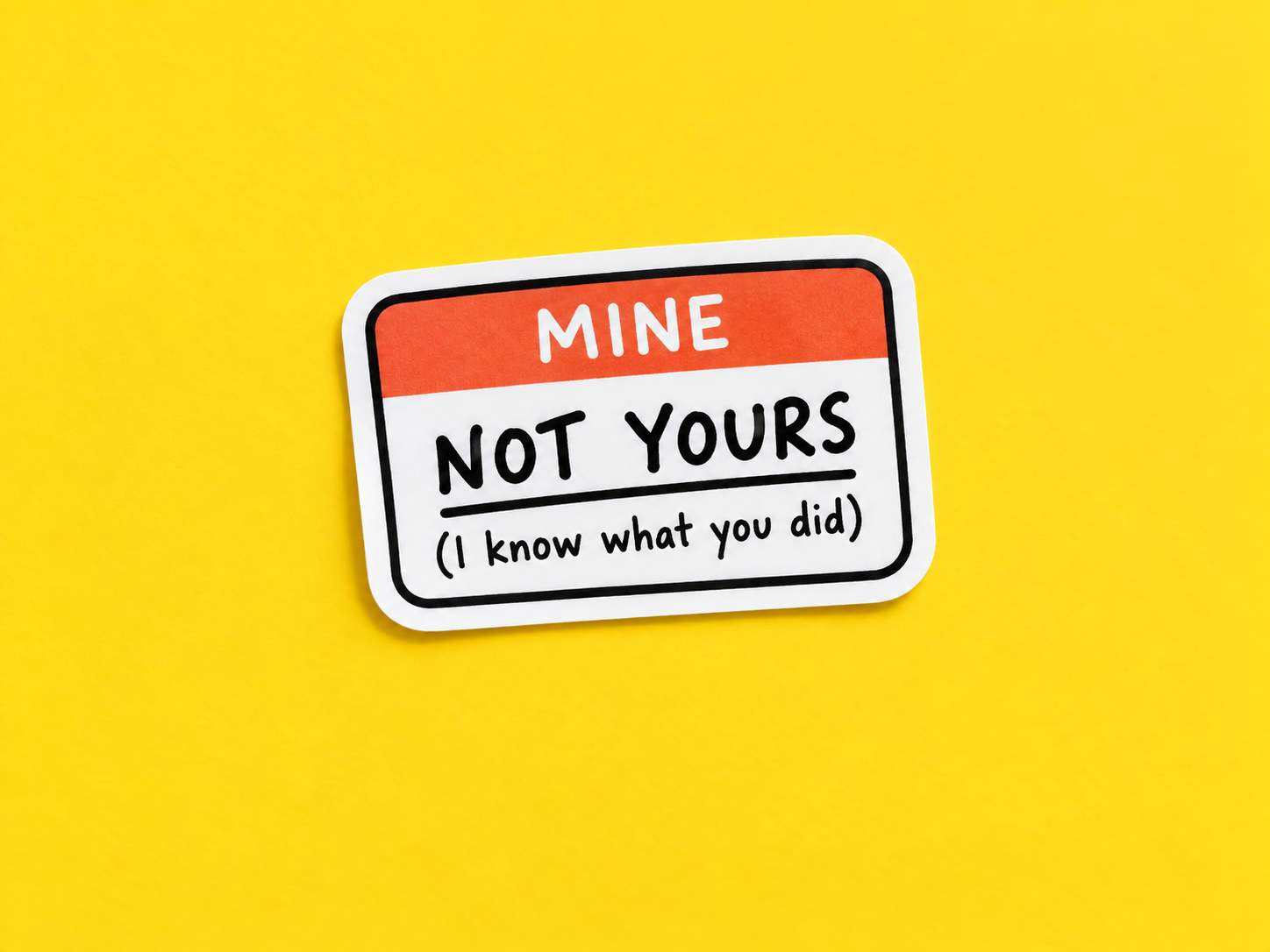
A label can say more than whose something is, and that’s where a sticker has the edge over a note. It can say what you’d otherwise write in a passive-aggressive note, before anything has happened.
Passive-aggressive notes are almost always too long. They start politely, get personal somewhere in the second paragraph and sign off with “Many thanks”. A sticker only has room for one sentence, so keep the tone and cut the rest. Here’s how it sounds when it fits on one line:
- “To whoever is taking my milk: I’ve seen the level.”
- “This cable is private property.”
- “This drill was lent, not given.”
- “Borrowed book. The owner hasn’t forgotten.”
Sign it as well. A small “/Anna in Accounts” at the bottom makes the whole thing considerably more unsettling.
Where a name label earns its keep
Most of what gets left behind or mixed up lives in a handful of places, and each one needs a slightly different approach.
The charger at work
A charger at the office stays yours for about as long as an umbrella in the office umbrella stand. The cable is too thin for an ordinary sticker, so use a long, narrow one instead: wrap it around the cable and let the sticky sides press together. Now you have a small flag you can read from across the desk.
The flag has two sides, so your name needs to be on both halves. The easiest way to see which way the second one should face is to fold a strip of paper around a pen before you order. The plug itself has a smooth plastic surface, and a small round sticker is enough there.
The milk in the office fridge
Milk in the office fridge disappears a splash at a time, and a splash doesn’t count. A narrow sticker with a scale on it, like a measuring jug, running along the edge of the carton with “Level noted” at the top says everything that needs saying.
The carton goes in the recycling when it’s empty, so this is a job for a stack of small stickers, one per carton. Put it on while the carton is still dry, before it goes in the fridge, because a cold carton gets damp and the adhesive grips less well.
Your tools
Tools rarely disappear for good. Mostly they’ve just moved into someone else’s van. Label the tool itself or the hard case it lives in before you help a friend move house or lend the drill to the neighbour. Anything that leaves the house gets your phone number too.
Tools get dusty and thrown around, so wipe the surface first and choose Heavy Duty, which is made for stronger adhesion and rougher handling.
Helmets, skis and ski boots
Bike helmets, skis and ski boots have hard, smooth surfaces where a sticker holds well. They’re also the kind of thing that gets left in changing rooms and lift queues, so this is where the phone number does the most good.
Gym bags and backpacks are a different story. They’re fabric, and adhesive doesn’t get a real grip on fabric.
The book you lend out
People have been pasting bookplates, a label with the owner’s name, inside book covers for several hundred years. They’re more or less the passive-aggressive note’s polite grandparent. Yours doesn’t need to be quite as polite: “This book belongs to Anna. Anna remembers who she lent it to.”
Inside the front cover it’s invisible on the shelf, but whoever borrowed the book gets to read it every time they open it.
Where a sticker doesn’t belong
A sticker isn’t the right answer everywhere, and in these cases you’re better off doing something else:
- Clothes and workwear, which need iron-on or sew-in labels.
- Lunchboxes, mugs and anything else that goes in the dishwasher. A strip of masking tape and a permanent marker does the job and is easy to replace when it comes off.
- Fabric and textured rubber, where adhesive can’t get a proper grip. Some plastics are hard work for an ordinary sticker too, and that’s the job Heavy Duty is made for.
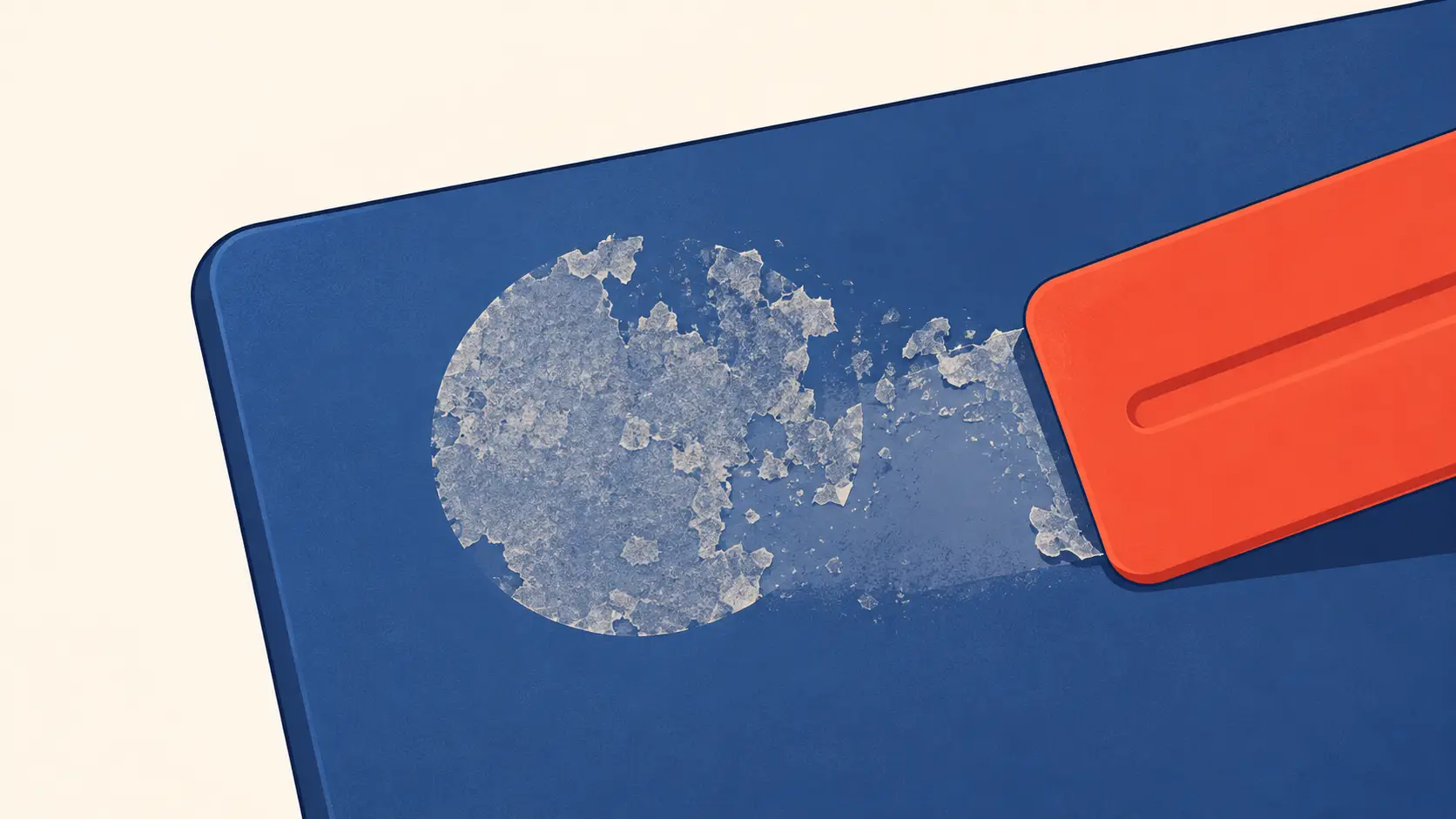
It also only applies to your own things. Put a sticker on the communal hallway or a colleague’s charger and it won’t be long before there’s a passive-aggressive note next to it, this time from the landlord. If something you labelled has to stay behind when you change jobs, here’s how to remove stickers and sticker residue.
Size, text and finish
The text has to be readable at arm’s length, inside a fridge or in a tangle of cables, otherwise it’s just a sticker. Design it wherever you usually do (Canva works fine) and pick a heavy typeface, nothing cursive. The letters need to be bigger than you think, so shrink the design on screen to its real size and check you can still read it.
Matte is the safest choice for text, because a glossy finish catches the glare from the strip lights in the office kitchen. Holographic is lovely, but the text gets hard to read as the colours shift, and nobody takes an angry sticker seriously when it sparkles. Black text on yellow reads from a distance and looks like a warning before anyone has read a word.
If we were labelling our own charger, we’d order a long, narrow die-cut sticker in matte, black text on yellow, with the name on both halves. Each design is its own product, so the milk scale and the cable flag are two separate products. Here’s how we’d handle the most common things:
| Item | Shape and size | Finish | Text |
|---|---|---|---|
| Charging cable | Long and narrow in a custom size, folded into a flag | Matte | Your name on both halves |
| Plug and earbuds case | Round, 3 × 3 cm | Matte | First name |
| Milk carton | Narrow in a custom size, with a scale | Matte | “Level noted” |
| Tools and toolbox | Round or die-cut, 3 × 3 to 5 × 5 cm | Heavy Duty | Name and phone number |
| Helmet, skis and ski boots | Round or die-cut, 3 × 3 to 5 × 5 cm | Matte or Premium | Name and phone number |
| Book | Round or die-cut, 5 × 5 to 8 × 8 cm | Matte | Name and one sentence |
Making it stick
When a name label peels off, the surface is usually the problem rather than the sticker. Grease, dust and silicone stop the adhesive getting a grip, so wipe the surface, let it dry, then press the label down from the centre outwards.
Cold weakens the grip too, so if your tools spent the night in the van, let them warm up to room temperature first. There’s more in why stickers peel and how to make yours hold and how to apply a sticker without bubbles.
Make your own name label
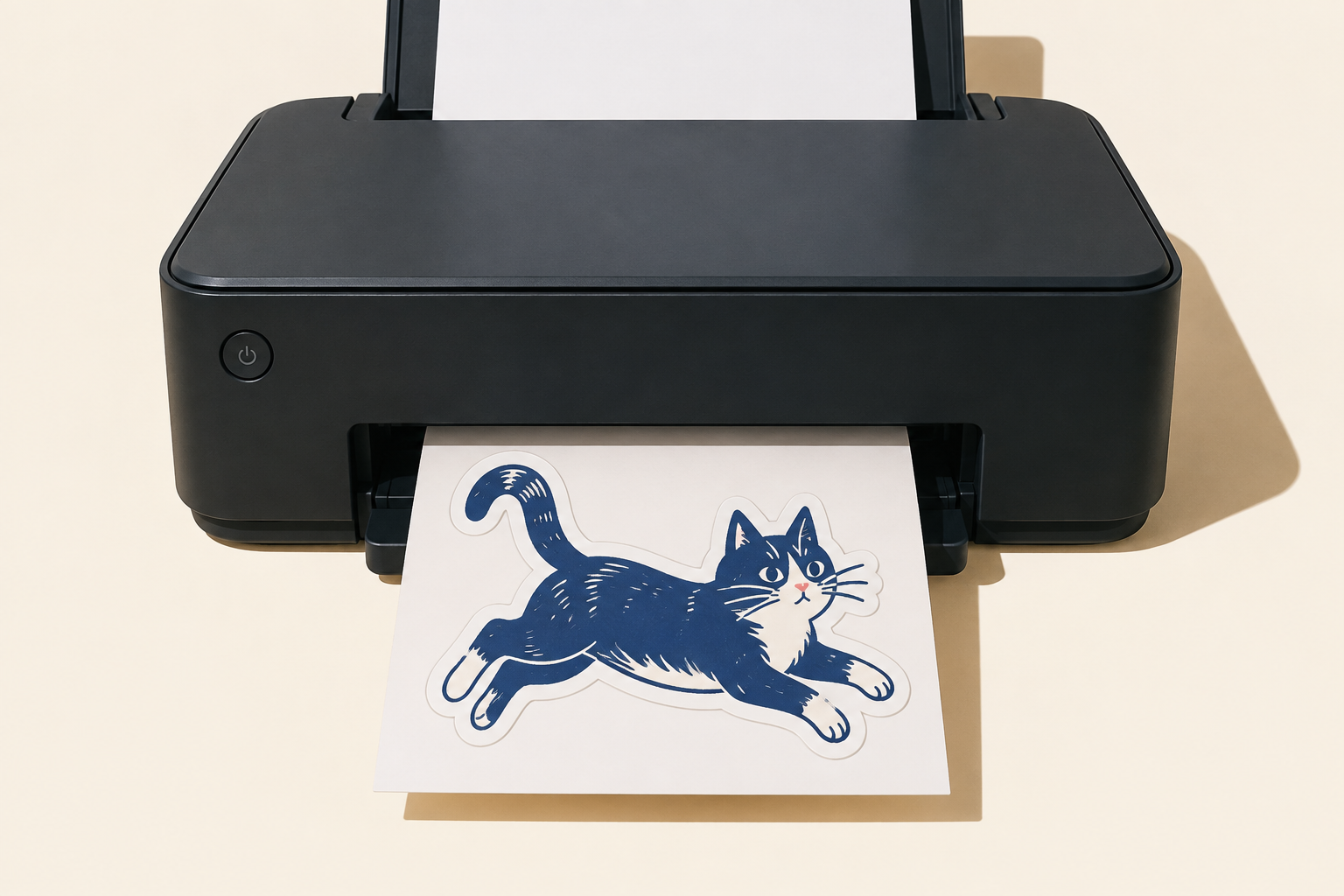
You don’t need any design experience for this. A Canva design works, and so does a phone photo of a note you’ve written by hand, as long as you take it straight from above in good light so the picture is sharp. Then your sticker is a genuine passive-aggressive note, in vinyl.
When you upload the file and choose material, size and quantity, the preview shows your text at its real size before you order, and that’s where you’ll notice if the sentence is still too long. If you’re not sure the photo is sharp enough, see why a sticker can look blurry.
There’s no minimum, so one sticker for the charger is just as fine as fifty for the toolbox. Make your name label
Name labels for adults: common questions
What are the best name labels for adults?
It depends on the surface. On hard, smooth things like chargers, tools, helmets and books, a printed sticker works best, as long as the surface is clean and dry when you put it on. On clothes, iron-on or sew-in labels hold better.
Can I use stickers as name labels on clothes?
No, not on clothes that get washed. Stickers aren’t made for the washing machine, so workwear and clothes for a care home need iron-on or sew-in labels.
How can I make my own name labels?
Design the label in Canva or photograph a handwritten one, upload the file and choose shape, size and finish. The preview shows how it will print before you order, and you can order just one.
How do you label a charging cable?
Wrap a long, narrow sticker around the cable and press the sticky sides together so it forms a flag, with your name on both halves. A small round sticker on the plug works as well.
How big should a name label be?
Small enough to sit on a flat part of the item, and big enough to read at arm’s length. 3 × 3 cm is enough for a plug or an earbuds case, while tools, helmets and books have room for 5 × 5 cm or more.
 Staff
Staff